

Investor Trends in Dubai Real Estate 2026 reflects a market that is gradually moving from rapid expansion to a more stable and fundamentals-driven phase. After recording nearly 19.8% capital growth in 2025, the sector is expected to moderate to around 10% in 2026, signaling a healthier, more sustainable cycle.
Dubai’s population surpassed 4 million in 2025, adding approximately 200,000 people in one year, nearly 470 new residents per day. This steady expansion continues to sustain housing demand across apartments, villas, and luxury properties.
As highlighted by Christie’s Real Estate Dubai:
“Dubai’s rapid population growth is reinforcing long-term housing demand across all segments, creating a stable foundation for sustainable real estate expansion.”
This demographic momentum plays a defining role in Investor Trends in Dubai Real Estate 2026, as it supports real demand rather than speculative activity.
Since 2021, more than 250,000 Golden Visas have been issued in the UAE. This initiative has encouraged long-term residency and shifted the buyer structure toward stability. End-users now account for roughly 50% of total property transactions, reducing speculative activity.
Recent UAE property news highlights how residency-focused buyers are contributing to a more mature market environment. The increase in long-term ownership is improving market resilience and reducing short-term volatility.
The buyer profile is evolving. While cash buyers remain significant, accounting for around 49–50% of Q3 2025 deals, mortgage-backed purchases increased to 52% in 2025. This rise reflects growing confidence among residents who see long-term value in ownership.
International buyers from India, the UK, Pakistan, Europe, Russia, North America, and the wider MENA region continue to dominate foreign demand, reinforcing Dubai’s global appeal.
To better understand the supply outlook, consider the key figures below:
| Indicator | 2026 Estimate |
| Scheduled new homes | ~100,000 units |
| Typical delivery delays | 30–40% |
| Average price | AED 1,676 per sq ft |
| Expected 2026 growth | ~10% |
Although 100,000 new homes are planned for delivery in 2026, historically, 30–40% of projects have experienced delays. This reduces oversupply risks and keeps actual handovers below launch volumes, a stabilizing factor in Investor Trends in Dubai Real Estate 2026.
Investors are focusing on clearly defined strategies:
The Dubai Land Department’s digital title deed pilot is expected to transform property transactions and expand access for smaller investors. This innovation is increasingly discussed in UAE property news as a structural shift in the market.
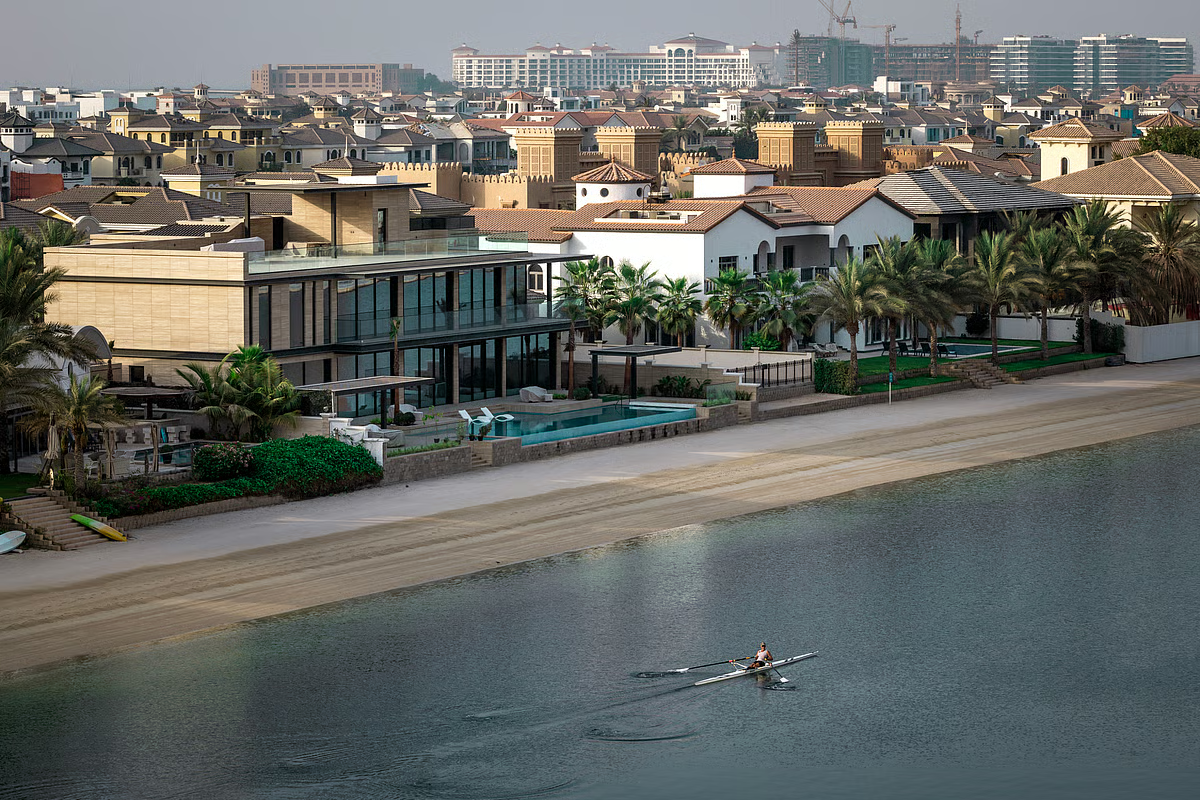
Location hotspots remain strong. Business Bay, JVC, Emirates Living, Palm Jumeirah, Downtown Dubai, Expo City, and Dubai South continue to attract strong activity driven by infrastructure development and rental demand.
Conclusion
Investor Trends in Dubai Real Estate 2026 indicates a transition from rapid, speculative expansion to a more measured, sustainable market cycle. Supported by population growth, policy stability, balanced supply, and digital innovation, Dubai’s real estate sector in 2026 appears well-positioned for steady, long-term performance rather than short-term volatility.